Asha lost 14.2 pounds and 30 inches all over her body. Epilepsy and asthma have made her weight release journey a very slow process but she knows that slow and steady wins the race. We celebrate her “stick with it” attitude. Check out her story.
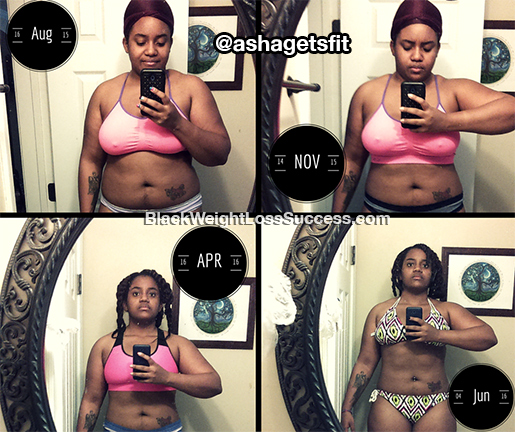
I am interested in sharing my story to inspire others on their own fitness journeys. My motivation to lose weight and get healthier was just the simple fact that I wasn’t happy with how I felt or looked. I knew that I needed a change.
My inspiration when I wanted to give up came from my family, because in making my own choice to get healthier it also motivated them to join in as well so we could support each other.
More info on intermittent fasting |
I changed my eating habits slowly at first by cutting out excess sugar, drinking more water, upping my intake of vegetables and cooking most of my meals. However, I saw the majority of the shift in my physique from eating by an 8/16 intermittent fasting rule. That means that I only eat my meals during 8 hours of the day. Then I fast for 16 and workout before I break that fast. This method of eating along with eating more protein and overall clean eating has assisted greatly in helping the process along.
I try to work out at least 5 days a week with two rest days, usually on Wednesdays. Saturdays and Saturdays are also my cheat days where I am not as restrictive with my eating. My workouts consist of 20-25 minute circuits in more of a HIIT or Tabata format, focusing on strength training moves as well as moves that will get my heart rate up. I have come to love and hate the burped and I find that is my most effective exercise. I have an entire routine focused just around burpees.
My starting weight was 181.2 and my current weight is 167 and my height is 5’2. I’ve lost right around 15 lbs and 30 inches all over my body. I have also gained muscle in places I didn’t even think I ever would. I’ve been working on this for a few years now since 2010, but I have epilepsy and asthma so it’s been a long process. I have made the most progress since last August when I got both the epilepsy and asthma under better control.
My advice to others who want to lose weight would be never to give up and to always find your WHY. Once you find your big why, there’s no stopping you.
I have an Instagram account under @ashagetsfit where I am very open and honest about my process and what I’m going through day to day with fitness. I also have a Facebook page: Kindred Spirit Wellness Coaching. I have recently decided to try and assist others on their journeys as well. I post progress pictures of myself on that page as well as my website to motivate others and run free challenges to offer fitness accountability.
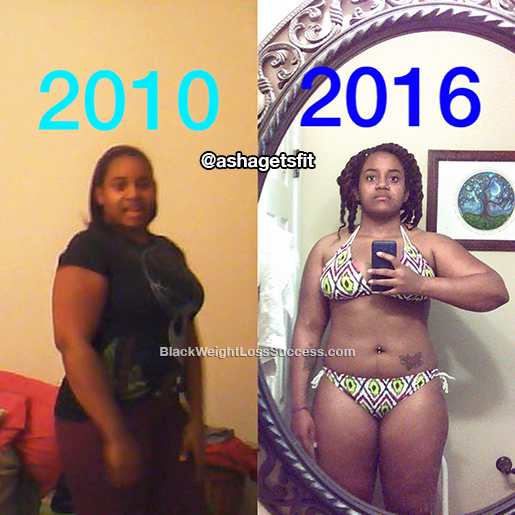
 There has been quite a low-carb craze over the past few years and that only seems to be growing in popularity. A growing number of people want to know more about what they are eating and its effect on the body. Perhaps they are younger people doubting how healthy the average American diet is or the older generation looking for an answer to their health problems. Recently, there has been a buzz about how low carb diets, and American diets in general, should include more healthy fats.

 The ketogenic diet, better known as the “keto” diet, is a diet that was originally developed to help people with difficult to control epilepsy (specifically, children with epilepsy). It is a high-fat, moderate protein, low carbohydrate diet. Here’s why it has been recommended for epilepsy: Carbohydrates are important for brain function, usually in the form of glucose. If there are very few carbohydrates in the diet, the liver is forced to do something different to make up for it. The liver converts the fat into fatty acids and a substance known as ketone. Ketone bodies replace the glucose, and are used in the brain instead. Apparently, this state of elevated ketone levels (known as ketosis), actually helps to reduce how often seizures occur in epileptics (not a cure all but it has worked for some people).