Let’s discuss two major schools of thought in the diet and fitness world today: one argues that a calorie is a calorie is a calorie, and the other argues that not all calories are created equal. So, who is right? Should you count calories or should you count macros/flexible dieting.
The answer is a little bit of both.
Why Counting Calories Is Important
You cannot lose body fat without some kind of a caloric deficit – you need to be aware of your caloric intake in some manner for weight loss. Depending on the source of the food, a calorie can be nutrient rich, nutrient poor, or even devoid of any nutrients. The fat and fiber content (or lack thereof) will also contribute to how filling the food is and how long it will be before you’re hungry again.
Nutrient rich foods include most fruits and vegetables, whole grains, beans and lean meats. What is not on this list: sweets, soft drinks, alcohol, and almost all processed foods.
What makes calorie counting harder? The vast majority of Americans have no clue how to estimate their caloric needs. Here is where counting macronutrients, or macros, has a leg up on calorie counting right out of the gate.
Someone can estimate their caloric needs using only their age, height, and weight. The problem here is that this calculation does not take into account your activity level, body fat, or muscle mass – all of which have a major impact on your metabolic needs. It also doesn’t help that most people significantly overestimate their activity level.
Calorie counting doesn’t take into account protein requirements either. Protein (regardless of the source) is hugely important for cellular function at every levels of the body’s structure, regulation, and function of all of your organs and tissues.
Macros: A More Complete Way of Counting Calories
There are three major macronutrients that food sources contain in various ratios: protein, carbohydrates, and fat. Also important to counting macros is fiber intake, and we’ll address that shortly.
- Protein has four calories per gram.
- Carbohydrates have four calories per gram.
- Fat has nine calories per gram.
In order for you to figure out your macronutrient intake for the day, you’ll first need to estimate your body fat percentage. The best methods are through a DEXA scan (done in the hospital), underwater dunk tanks, or a Bod Pod, but calipers and handheld body fat scanners are both fairly accurate. Using body tape or estimating based on body appearance are extremely inaccurate.
Knowing your body fat percentage allows the calculators to estimate your muscle mass, which is how your protein intake is determined. The more muscle mass you have, the more protein you need to maintain it. Also, more muscle translates into a higher metabolism and a better overall body appearance (less cellulite, more toned).
Generally, both men and women need around 0.8-2+ grams of protein per pound of lean body mass (muscle) for optimal health and energy, depending on their unique needs. The older an individual, the more protein they need. Also the more active an individual, the more protein they need.
Also of note: studies show that when additional caloric intake comes from protein alone, study participants don’t put on fat or gain much weight overall (the small amount of weight gained was lean muscle, and they lost fat mass).
That leaves carbohydrates and fat requirements. It is important to remember that carbs and fats are GOOD. You’re body needs them for energy and to support the same metabolic processes that also require sufficient levels of protein.
Fat intake should ideally be between 0.3-0.6 grams per pound of lean body mass. Exactly how much you need is again based on your unique needs. If you enjoy foods higher in fat, you could increase your fat macros and subtract from your carbs (accounting for the difference in calories/gram). It all depends on how your body works, what your fitness goals are, weight loss goals, etc.
Carbohydrates are the last to be figured out. For these calculations, you’ll need an estimate of your BMR (basal metabolic rate) and your TDEE (total daily energy expenditure). After your calories from protein and fat are accounted for, the leftover calories are reserved for carbohydrates.
Fiber is the other important part of counting your macros that is sometimes missed. Fiber is not only necessary for good digestion and bowel function, but keeping cholesterol in check as well. For those that count macros, meeting their fiber intake (usually between 10 and 40 grams daily) also ensures they are getting enough fruits, vegetable, and micronutrients in their diet.
That being said, I will note that counting macros can take considerably more time, planning and patience than counting calories, because you are tracking 3-4 variables instead of just one (calories). Many people who count macros are more willing to eat the same meal prep plan for 4-5 days in a row because they know the meals are effective and they have very specific goals. They would rather have the results, so they may sacrifice variety.
Final thought: If you’re looking for a good diet plan, the best diet is the one you, as an individual, can stick to. Do your research and do what works for you.
 Eating Clean and Lowering Those Carbs in January!
 The number one reason you should drink smoothies: They are an easy way to add more nutrients to your daily diet; Vitamins, Antioxidants, Potassium, Fiber, etc. By and large, Americans eat too much processed food that has very little nutritional value. When we talk about weight loss, we always stress balanced, healthy eating and eating food with lots of nutritional value is key for a balanced diet.
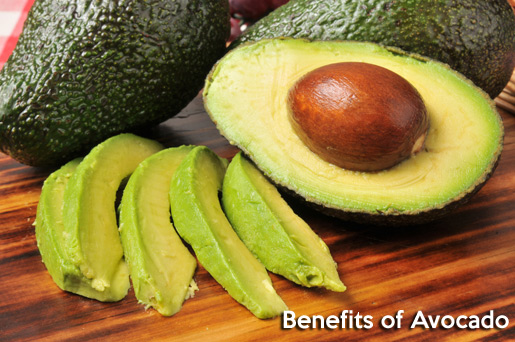 Avocado is a unique fruit that is loaded with healthy fats and important nutrients. Unfortunately, many have been led to think of this fruit as nothing but a side dish in the form of guacamole. The delicious avocado should actually be a regular part of a healthy diet for a number of reasons. Here are just a few of the benefits of eating avocados on a regular basis.
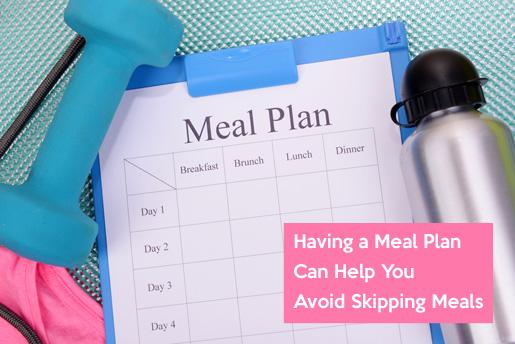 It’s safe to say that you’ve probably skipped meals either accidentally or on purpose. You may believe that skipping calories will simply help your weight loss efforts. Unfortunately, skipping meals doesn’t just leave you hungry but could actually increase weight gain! Not only is weight gain the opposite of what you are trying to achieve, but there are other side effects of missing meals that you should know about. Here are 6 things that could happen to your body when you decide to skip a meal.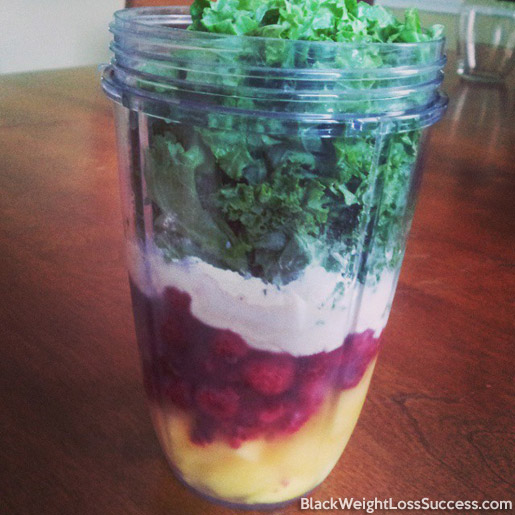
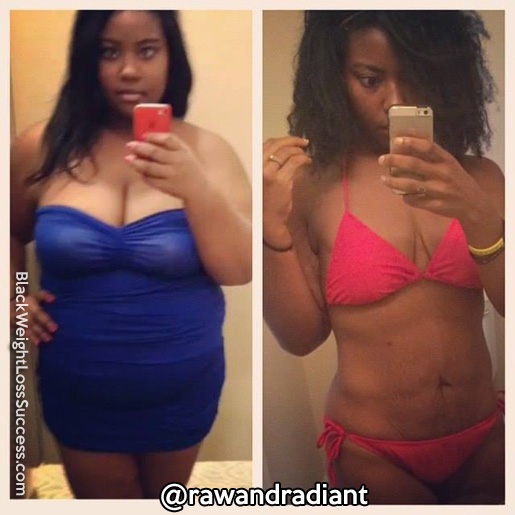

 I follow a raw, plant-based lifestyle so my meals consists mostly of fruit, vegetables, nuts, seeds, smoothies and fresh pressed juices. A typical day for me starts with lemon water followed by a green juice which is loaded with raw vitamins, minerals, and phytonutrients. For lunch I always eat fruit until I’m satisfied, dinner is usually a really large salad with a lot of different types of vegetables and different green leaves or it could be a raw vegan meal such as zuchinni pasta or raw pizza!
 There is a lot of debate over what the optimum human diet is, especially when it comes to weight loss. I am of the belief that there is no perfect plan, no one size fits all plan for losing weight. However, I do think that fad diets promising to help you lose X number of pounds in a week or two should be avoided like the plague.
 A healthy diet doesn’t just consist of the standard variety of vegetables, grains, beans, fruit and lean meats. One of the most important aspects of eating well is to eat a variety of food! Humans are naturally creatures of habit and it can be easy to fall into a routine of eating the same foods. Break this habit and you will notice better health and improved vitality. It may even help you push through a weight loss plateau you’ve hit.
 The average person is likely familiar with seaweed in two ways: the green stuff in the ocean and the nori sheets used for sushi. Seaweed may not be very popular in traditional Western cuisine but it would be very much worth it to pick up a bag at your local Asian market or health food store. Some major grocery stores also sell the dried, roasted kind as a snack in sheets. Very tasty…kinda like potato chips.