Losing weight and maintaining your weight can be a daunting process that requires both patience and a significant amount of focus in order to achieve the desired results. That’s just the truth. It doesn’t happen overnight and it doesn’t happen without managing what we eat. Counting calories can be a thorny business due to the fact that so many “favorite” foods are rich in calories and/or lack nutrients. However, it’s not just the comfort foods or fast food. Ever check to see how many calories are in that so-called “healthy salad” or how much sugar is in that “natural” breakfast bar? How about that gluten-free brownie?
Yes, counting calories can certainly help you lose or gain weight, but there are a few reasons to base your food choices on more than just calorie content. For instance, when you consume food rich in fiber, it will reduce your frequent cravings for food because fiber will keep you feeling quite full for a while.
Your food choices certainly can affect your weight one way or another. The key is to find the balance that works for you and your goals. There is no “one-size-fits-all” way of eating. Proteins and carbohydrates have 4 calories in a gram, while alcohol contains 7 calories per gram. On the other hand, fats have 9 calories per gram, which is the highest among the 3 food choices, but you still need healthy fat. For years, people have said that a “balanced diet” is the best way to eat and that balance comes from knowing the nutrient content of your food, not just the calorie count.
Why Counting Fat, Protein and Carbs Is Better Than Just Counting Calories
You may have heard the term “marcros” or “counting macros” when it comes to health and fitness. However, if you are not familiar with the term, it is a short form for macronutrients. Macronutrients are made up of proteins, carbs and fat. You can break your carbs down and count sugar and fiber grams as well.
Macros versus calories
Most people understand a lot about calories because of America’s obsession with weight loss. Calories offer your body the energy it needs to function at optimum level. We are all familiar with the concept of calories in/calories out. That’s the concept that weight loss or gain depends on the number of calories you consume in a day and the amount you burn. The more the calories you consume that you don’t need for your body to function, the higher the chance of gaining weight. This implies that weight gained or lost is directly proportional to number of calories present in a particular food. However, this is just part of the equation.
Many people do take a quick glance at the number of calories per serving found on the nutritional label of food products, but when you are losing weight, you’ve got to check the count for nutrients as well. Every macronutrient plays an important role in your body, including helping you achieve your physique objectives and goals far much faster than counting calories alone. Let’s take a look at the macronutrients and how they may play a role in weight management.
Carbohydrates – 4 calories per gram
Carbs or carbohydrates give the fuel for perfect workouts or routines, particularly when resistance training is concerned. Carbohydrates are stored in the body muscles in a form known as glycogen. During exercise, resistance training for example, glycogen is broken down to release energy. You require energy in order to lift weights to increase or maintain body mass. Carb needs will can vary from one individual to the other depending on daily activities. For instance, a professional athlete may require more carbs than someone who is less active. This main issue with carbs: People over eat them and sugar is the main source of carbs with very little fiber included. In my opinion, 20-40% of a daily diet is a healthy range for most people, but where you fall in that range will depend on a number of factors, including health, activity level and current weight.
Protein – 4 calories per gram
Protein is important when it comes to preserving lean muscle tissue when you are experiencing caloric deficit. It also helps build muscles if you are trying to increase muscle tone and gain muscle. Moreover, it can regulate your appetite while keeping you satisfied for longer periods of time.
Protein is known to have a high thermic effect. In other words, it takes it requires a lot of energy to digest a gram of protein as compared to other macronutrients. This explains why protein diets are effective and efficient for weight loss. In order to maintain or lose more weight, you need to consume food rich in protein. Remember that the more protein you consume, the more calories your body requires so as to burn calories. The main issue with carbs: People don’t eat enough of it or they eat low quality cuts of meat. The amount of protein a person should eat will vary depending on, health, training goals, etc… but in my opinion 15-35% is a good range for most people.
Fat – 9 calories per gram
Many people do not know that fat has a wide range of benefits, such as acting as a shock absorber, brain health and enhancing proper hormonal functioning. It is also a major component needed in the production of the testosterone hormone, which is responsible for fat loss, sex drive, as well as muscle gain. To keep your weight in check, it is advisable to consume about 0.3 to 0.7 grams per pound of lean mass. When you consume more than 0.7 grams, you risk gaining more weight, bearing in mind that 1.0 gram of fat has 9 calories. Here is some additional info on fats.
Fiber and Sugar – What are your carbs made of?
High fiber diets can be the ideal way to manage weight. This is because fiber passes slower through your digestive system without affecting your blood sugar level and can help to keep you regular (colon health). It can also make you feel full after meals, helping to prevent cravings and thus keeping you from adding more calories to your diet.
Sugary foods aren’t created equal. A candy bar and an orange can have a lot of sugar calories, but the candy bar has no vitamins and nutrients. The orange has vitamin C, fiber and other benefits. Here is the key: Sugar counts no matter how you eat it. Sugar should not be you main source of calories because that’s just not a balanced diet. The body needs balance. If you are dealing with a sugar addiction or serious sugar cravings, make sure that you stay way from processed, empty sugars and that you keep you healthy sugar intake to 1-2 servings per day. For example: A green smoothie with berries, spinach and protein powder is a great way to get a serving of fruit.
When you want to manage your weight, keep all of these factors in mind, rather than just counting calories. Take the time to learn about macronutrients and how each one plays a role in weight loss, management, and gain. As you do, you’ll be more likely to attain your weight goals easier and faster.
Note: Your doctor or a nutritionist can help you find a more precise balance of calories and nutrients that fits your needs. If you have health issues, like diabetes, high blood pressure, gallbladder problems, issue with your pancreas, kidney issues or liver issues, talking with a medical professional is key, especially when it comes to fat and carbs.

 “I work out so I can eat whatever I want”
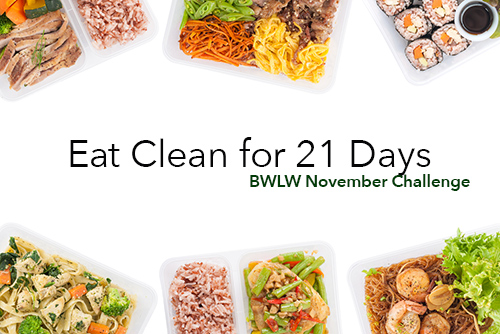 Eat Clean for 21 Days and Lose to Win with our Nov
  Clean Eating Ebook:




 Ask top doctors and nutritionists
  This is the first recipe of many as we commit to bring you more recipes this year. Personally, I love simple recipes that don’t make you jump through hoops and this one is very straight forward. It will work for folks who are eating clean, eating Paleo, eating low carb, etc. You’ll find all the ingredients and directions below.

 Dairy of all types, like milk, cheese and frozen dairy treats, can cause bloat in varying degrees. The reason for this is the same reason that some people experience lactose intolerance. Milk sugar, known as lactose and found in dairy products, can cause digestive upset for some people. While one person may be able to drink/eat dairy throughout the day without a worry while others may get bloated and feel sick if they have a small bowl of ice cream.
 A healthy diet doesn’t just consist of the standard variety of vegetables, grains, beans, fruit and lean meats. One of the most important aspects of eating well is to eat a variety of food! Humans are naturally creatures of habit and it can be easy to fall into a routine of eating the same foods. Break this habit and you will notice better health and improved vitality. It may even help you push through a weight loss plateau you’ve hit.
 The average person is likely familiar with seaweed in two ways: the green stuff in the ocean and the nori sheets used for sushi. Seaweed may not be very popular in traditional Western cuisine but it would be very much worth it to pick up a bag at your local Asian market or health food store. Some major grocery stores also sell the dried, roasted kind as a snack in sheets. Very tasty…kinda like potato chips.
 If you don’t want to fall off your new healthy eating regime you have to be prepared to fight temptation while grocery shopping. It is easy to lose focus and start perusing the aisles aimlessly. Before you know it, you get home and while you’re putting your food away realize you bought junk food that you shouldn’t have or spent much more money than you had budgeted.